In preparation for watching the recent oral arguments in the Washington supreme court for the Rousso v. State of Washington appeal, I also watched the oral arguments in the appeal argued immediately prior, Internet Community & Entertainment Corp. v. Washington State Gambling Comm’n (a/k/a the "Betcha.com" case). My purpose in watching the Betcha.com argument was twofold—to get a baseline feel for how the justices questioned the attorneys, and also to see how the justices approached another case arising from the Washington Gambling Act. As a bonus, the same attorney, Jerry Ackerman, argued both appeals for the state. As I remarked in my prior discussion of the Rousso arguments, I felt Ackerman had a stellar performance in the Betcha.com argument, but was less polished and more challenged by the court in the Rousso argument.
This past week, reader Matt B. sent me links to two posts by Nick Jenkins, founder of Betcha.com, on his personal blog discussing his view of the oral arguments. The first post was on May 29, two days after the oral arguments, while the second post was on May 31. The blog posts were a rather interesting insight into how Jenkins as a party to the case viewed the oral arguments.
By way of background, Betcha.com was an online gambling site with an interesting, and likely unique, business model. Essentially, Betcha.com would permit users to post potential wagers (e.g., "I'll give 4-1 odds against Tiger Woods winning a major in 2010"), and other users could choose to accept those wagers. Betcha.com would then charge a small fee for matching up bettors for the accepted wagers, and would also escrow the funds wagered until the bet was resolved, paying off winners. As Jenkins described the website, it was meant to be an "Ebay for bets".
Now, this obviously sounds like an online sports book, and bookmaking tends to be illegal under most state gambling laws. This is where Betcha.com's unique hook comes into play—under Betcha.com rules, every bettor understood and specifically agreed that all bets were made on an honor system, and were completely unenforceable. Before bets were paid, bettors were given an option to "welch" on a losing bet and refuse to pay. The only repercussion was that the winning bettor might post negative feedback about the "welcher" and the "welcher" might lose "honor points" (honor points were a way to rate bettors, and users proposing bets could restrict acceptance to bettors with a set minimum honor rating). This provision was intended to get around a requirement in the Washington Gambling Act that gambling occurs when "... risking something of value upon the outcome of a contest of chance ... upon an agreement or understanding that the [winner] will receive something of value" if he wins. Betcha.com's contention is that, where the players agree that their bets are uneforceable, there is nothing at risk, and they cannot have the requisite "agreement or understanding" that the winner will be paid to constitute illegal gambling (think of Betcha.com as sort of an online version of a "gentlemen's wager").
Not surprisingly, the state of Washington authorities took a somewhat different view of Betcha.com, and swooped in, shut down the operation, and seized the company's assets. Washington authorities also apparently coordinated with Louisiana authorities to create a felony gambling charge under Louisiana law (based on $35 in bets made by a Louisiana state trooper, which netted Betcha.com a whopping 70 cents in profits). Jenkins was even extradited to Louisiana.
Back in Washington, a trial court judge in the civil forfeiture action ruled that the Betcha.com business model was illegal gambling and bookmaking. On appeal, the Washington court of appeals ruled (in a split decision) that the illegal gambling and bookmaking statutes were ambiguous and thus could not be applied to Betcha.com. The state appealed, and the Washington supreme court agreed to review the case; this in itself is a bad sign for Betcha.com, as a state supreme court rarely exercises discretionary review in a case unless: a) there is a constitutional issue, b) there is a split among lower courts on a legal issue, or c) the court intends to reverse an erroneous ruling. The first two reasons don't apply to Betcha.com, so the grant of further review is rather ominous in itself.
The oral arguments before the Washington supreme court were also unsettling to anyone wanting a Betcha.com victory. The court seemed to accept many of state attorney Ackerman's points, while Betcha.com's attorney, George Telquist, was on the defensive through almost his entire argument. The justices seemed to accept the state's position that, merely because the wagers were unenforceable didn't mean that the bettors lacked an expectation that the bets would be honored, and thus fell within the definition of illegal gambling. On the bookmaking argument, the justices focused on the fact Betcha.com received a fee from every wager, regardless of whether the bet was ultimately honored. The justices seemed inclined to regard this fact as fulfilling one of two possible statutory methods for establishing bookmaking (accepting a fee for placing bets, or accepting a bet itself). Although it is impossible to predict appellate rulings solely from oral arguments, the court during arguments clearly appeared more persuaded by the state's position than Betcha.com's position.
In his blog posts, Jenkins seems to agree that the oral arguments went poorly, and that the Washington supreme court seemed inclined to rule against Betcha.com. Jenkins asserted the justices likely had not read the appellate briefs prior to argument. In my personal experience, I find that contention to be highly unlikely as a matter of general practice, and based on the court's questions, it seemed to me that the justices were asking important questions about the parties' main arguments, consistent with the arguments raised in the parties' briefs (available online at the Washington court website—search by argument date of May 27, 2010).
Jenkins also vented that the Washington supreme court had simply rejected what he felt were clear and obvious legal points in favor of Betcha.com's position. Although the court seemed to disagree with Betcha.com's arguments, that doesn't mean that the court was engaged in illogical reasoning, or misunderstood the arguments. Sometimes, a court understands an argument perfectly, but just isn't buying the argument a party is selling.
My knowledge of the Washington Gambling Act is limited to reading the briefs and watching arguments in both Betcha.com and Rousso. But, I think Betcha.com's argument, while creative, is too clever by half. As the state argued, traditional gambling debts with bookies are technically unenforceable, and technically a loser never has to pay off a winning wager. Nonetheless, traditional gambling is clearly barred by statute. If Betcha.com's argument is accepted, traditional bookies could circumvent the law by merely telling gamblers—with a wink and a nod—that they had no obligation to pay if they lost. Similarly, the Betcha.com argument on bookmaking would arguably make the bookmaking statute unenforceable against traditional bookmakers who do not book wagers, but merely charge a fee for matching up bettors. This interpretation would allow anyone to open an online sports gambling site (or a site allowing gambling on any future event, say, the Oscars or an election) without regulation, basically making the bookmaking statute superfluous (a result that courts disfavor).
Although I am in favor of legalized online sports gambling, and the actions by the state seem vastly disproportionate to any real risk posed Betcha.com's fledgling operation, I think the most likely result is a ruling finding that Betcha.com violated the state's illegal gambling and bookmaking statutes. Betcha.com's arguments are certainly creative, but the "welching" option really feels like a gimmick to skirt the law. A ruling in favor of Betcha.com would likely render the state's gambling statutes virtually unenforceable against traditional sports bookmakers, and I doubt the Washington supreme court will want to open that particular door. Still, it is an interesting case to keep an eye on.
June 06, 2010

June 05, 2010
Friday Fun (v. 1.3)—Mayflies & Mentos
This week's installment of Friday Fun was delayed because I had to argue an appeal before the Iowa Court of Appeals yesterday, which is one of my favorite parts of my job. The cool twist yesterday was that the argument was selected to be part of a continuing legal education seminar in Okoboji (Iowa's premier lake resort area), so a hundred or so attorneys watched the argument, and a panel of five judges (rather than the usual three) heard the case. But, the location added eight hours of back highway drive to my day (though this time of year, it is a pleasant way to spend the day), and I just wasn't able to get this post out on time. So sue me!
Many of you have probably seen one of the many Diet Coke-Mentos explosion videos. The masters of the genre are at Eepybird.com, and the most recent iteration of their experiments is a Diet Coke-Mentos powered vehicle:
Also worth enjoying is their incredible and rather artistic performance with sticky note slinkies:
For those of us who are getting the shakes from extended absences from Vegas, here's a Diet Coke-Mentos fountain display that puts the fountains of Bellagio and Aria to shame (anyone can use water!):
* * * * *


Speaking of sex (trust me, my traditional female and alternative male readers certainly were in the midst of a sex chat), one of Nature's great sex-hound species, the mayflys, were caught on radar having one of their notorious raves/orgies. Apparently, mayflys often mature into adults en masse and proceed to mate in swarms for 30 minutes to two days before dropping dead (being unable to eat in the adult stage). At least mayflies don't need to worry about hiring a ghostwriter to assist with their online dating ...

* * * * *
Many of you have probably seen one of the many Diet Coke-Mentos explosion videos. The masters of the genre are at Eepybird.com, and the most recent iteration of their experiments is a Diet Coke-Mentos powered vehicle:
Also worth enjoying is their incredible and rather artistic performance with sticky note slinkies:
For those of us who are getting the shakes from extended absences from Vegas, here's a Diet Coke-Mentos fountain display that puts the fountains of Bellagio and Aria to shame (anyone can use water!):
The science behind the Diet Coke-Mentos phenomonenon is pretty interesting as well.
* * * * *
Last week, a woman sued Google because she used the Google Maps function to find a walking path route, and apparently got directions that included a busy highway without a pedestrian sidewalk. Rather than seek an alternate route, the woman decided to be an idiot and walk on the highway. Not surprisingly, she was hit by a car and injured. Now we know how the Google Robot Overlords intend to take over the world ... one gullible yahoo at a time.
* * * * *
With soccer's World Cup set to begin next week in South Africa, more evidence surfaced this week as to why Canada will never be a soccer power (besides their hockey and curling fixations). Apparently, a youth soccer league instituted a rule prohibiting blowout wins by better teams, by imposing a mandatory forfeit when a team wins by five or more goals. Seriously, forfeiting because a team is too good. From years of reffing youth league basketball, there are plenty of ways to prevent embarrassing blowouts short of this kind of ridiculous rule. In any event, trust me that the kids know which team is better, despite all the coddling from adults who want to shield their kids from the realities of competition. In fact, I thought teaching kids to be good winners and good losers was an important part of the youth sports experience.
In any event, in an effort to promote alternative (in the United States at least) sports, crAAKKer provides these very tasteful and artistic photos of World Cup stars from Vanity Fair:
* * * * *
Speaking of sex (trust me, my traditional female and alternative male readers certainly were in the midst of a sex chat), one of Nature's great sex-hound species, the mayflys, were caught on radar having one of their notorious raves/orgies. Apparently, mayflys often mature into adults en masse and proceed to mate in swarms for 30 minutes to two days before dropping dead (being unable to eat in the adult stage). At least mayflies don't need to worry about hiring a ghostwriter to assist with their online dating ...
Mayfly orgy on radar (via Neatorama.com)
June 04, 2010
D-Bag O' the Day (v. 1.11)—
Canadians vs. Handicapped Woman, Eh
Our D-Bag O' the Day is a double first—our first woman, and our first Canadian. So what did Elizabeth Brown do to merit this lofty status? Well, she is leading the opposition to plans to raze a house in Toronto to permit a husband to build a handicap-accessible new home on the site so that his wife—a quadriplegic suffering from transverse myelitis—can live with him. Brown claims the house deserves "heritage" designation which would limit the renovations that can be done to the home in the interest of preserving a historically significant home. The home did not have a heritage designation until Brown caught wind of the plans for the property, and she moved quickly to have the home considered for the designation. Brown doesn't want anyone to think her insensitive:

I’m not fighting to prevent her from something, even though they’ve been clear they’d like to build this house to help her with access because of her paralysis. I’m trying to preserve a home that adds character and beauty to my neighbourhood for future generations to enjoy. So: I don’t wish them any harm. I just want to protect that house.”That's right, Brown thinks her "right" to protect a view of a pretty house she doesn't own should trump the property rights and legitimate needs of the actual property owners. Oh, and she rolls her eyes at the handicap angle:
I don’t have a disability. Sorry. If I did, maybe I could use that, too.Brown truly is a stellar example of D-Baggery at its most exquisite.
Definitely not the house in question!
June 02, 2010
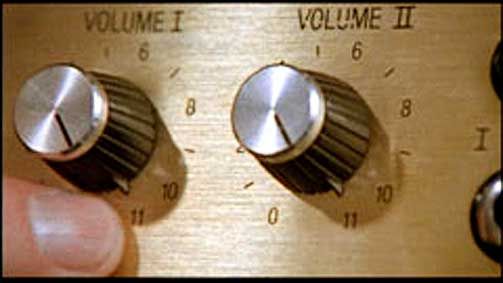
This Blog Goes to Eleventy-One
Nigel Tufnel: The numbers all go to eleven. Look, right across the board, eleven, eleven, eleven and...
Marty DiBergi: Oh, I see. And most amps go up to ten?
Nigel Tufnel: Exactly.
Marty DiBergi: Does that mean it's louder? Is it any louder?
Nigel Tufnel: Well, it's one louder, isn't it? It's not ten. You see, most blokes, you know, will be playing at ten. You're on ten here, all the way up, all the way up, all the way up, you're on ten on your guitar. Where can you go from there? Where?
Marty DiBergi: I don't know.
Nigel Tufnel: Nowhere. Exactly. What we do is, if we need that extra push over the cliff, you know what we do?
Marty DiBergi: Put it up to eleven?
Nigel Tufnel: Eleven. Exactly. One louder.
Marty DiBergi: Why don't you just make ten louder and make ten be the top number and make that a little louder?
Nigel Tufnel: [pause] These go to eleven.
—This Is Spinal Tap
I installed Google analytics during the first week of the blog, and it's interesting to check in periodically to see how many people are reading my blog, and what they are reading. There seems to be a core of 200ish of y'all that follow crAAKKer semi-regularly, but in total there have been over 2,200 "absolute unique visitors" (apparently unique IP addresses) from 43 countries and 893 cities scattered around the globe, making over 12,500 visits in total. Nowhere near Poker Grump numbers, but a lot more readers than I had imagined this early in the process.
Although I expected such an intelligent and thoughtful bunch to prefer my lengthy "law & poker" posts, imagine my surprise to learn you actually visit for the poker candy in my IMOP and "hilarity ensues" posts. There have been fewer comments than I had anticipated, most likely because my posts are always completely correct, but possibly because my posts are boring or non-controversial. Or, some of my posts may suffer from "TLDR" syndrome (too long, didn't read). But, my style is what it is, so if I feel a long post is appropriate, that's what you'll get. You certainly know you'll get your money's worth from crAAKKer!
One of the fun things I monitor are the Google searches that land people on crAAKKer. Some of them are obvious ("yaks", "ironman of poker"), but a few are amusing or even head-scratchingly absurd:
- "evil east germans"
- "5s2s five seconds to safety" (surprise!)
- "yoyo olympics"
- "bestiality blogspot" (just have to wonder about that query)
- "david begnaud gay"
- "fast booze"
- "invasion of the nits poker"
- "meadows gay poker"
- "mickelson 6'4" tall" (umm, OK ...)
- "poker insults" (our target audience, natch)
- "tom dwans office" (more important than his sexual preference!)
In any event, thanks to everyone who has supported this little poker outpost the past five months, whether by reading, commenting, or shooting me ideas for posts. I think my favorite author said it best:
"I don't know half of you half as well as I should like; and I like less than half of you half as well as you deserve."
—Bilbo Baggins in "The Fellowship of the Ring" by J.R.R. Tolkien
The Tour de WSOP
Kumar: Hang on a second, nurse. What we should probably use is marijuana. That'll sufficiently sedate the patient for surgery.
Male Nurse: Marijuana? But why?
Kumar: We don't have time for questions. We need marijuana now, as much of it as possible! Like a big bag of it.
—Harold & Kumar Go to White Castle
In what is likely the world's most pointless survey since Maxim discovered women lie about sex as much as men:
A Nova Southeastern University study recently presented at a national conference found that 80 percent of poker players around the world reported using drugs and other substances to enhance their performance in poker.
Poker players are using drugs such as marijuana, cocaine, amphetamines, Valium, and other prescription medications, as well as substances including caffeine, energy drinks and guarana to get an edge over their opponents.
Apparently the survey involved having a mere 198 poker players fill out an online questionnaire. The players self-selected to participate in the survey after seeing it advertised on online poker site. Not surprisingly, the demographics were heavily male (96%) and young (average age of 26). Also not surprisingly, the participants probably have an inflated sense of self, with a whopping 60% claiming to be professional (25%) or semi-professional (35%) players. Two-thirds were primarily online players. Now onto the pharmacology:
- 28% report using one or more prescription medications to improve their game. I suppose in the age of widespread use of "study drugs" (a/k/a "nootropics") like Ritalin and Adderall, it really should not be a shock that younger people who are college age or just out of college might have access to and past experience with such drugs, and use them to enhance their online poker performance. Most of the drugs reported in the prescription category either have or are reputed to have positive effects on concentration and memory. It should come as little surprise that these drugs were obtained by illicit means by a 3:2 rate over legitimate prescriptions.
- The high reported usage (by roughly 20% of respondents) of benzodiazepines (sedative/hypnotic drugs) and hydrocodone (a common opioid) might be as a method of counteracting the stimulant qualities of other drugs, rather than for their own benefits. It certainly doesn't appear as though these types of medications would have any independent positive effect on poker performance.
- With respect to "other" performance enhancing substances, caffeine is the king, as might be expected (71%), while the use of energy drinks (51%) seems rather low, at least given their ubiquity in the poker media. Scotty Nguyen will be happy that plenty of youngsters (30%) emulate his use of booze as a method for enhancing, well ... his personality, at least.
- One-third of those surveyed use marijuana to improve their poker play. This one just doesn't seem to add up. I suppose it might relax someone who is hyper or on super-monkey tilt. Maybe marijuana is like alcohol—a little bit helps relax a player and lower natural risk-averse inhibitions to allow aggression in play, but too much and the edge evaporates, along with the bankroll.
- Finally, 46% took some kind of nutritional supplement to improve poker performance. The most common were Vitamin B12, guarana, Gingko biloba, ephedra, and ginseng. Seriously?!? Online poker guys spend tons of time researching game theory and calculating odds, and then fall for the nutritional supplement scam? I get that guarana and ephedra are just alternative stimulants (though ephedra is rather risky), but for the most part, science really doesn't support the claims for most herbal supplements.
Wake me up if poker players ever figure out a way to hide an electric motor in a bicycle ...
Subscribe to:
Posts (Atom)